Networks
Top 7 Alternatives of Gamingtec
A network-by-network survey of where automated table-selection was permitted, where it was tolerated, and where it had become a way to lose an account.
August 19, 2026
You are evaluating Gamingtec against other iGaming platforms, and the comparison is getting harder to justify with each new requirement. Licensing reach and modular integration are the two criteria that usually separate the viable options from the rest. By the end of this article, you will have a clear ranking of seven alternatives, a concrete checklist for evaluating platform modularity and compliance, and a definitive number one pick for launching or scaling your casino and sportsbook operations.
The decision hinges on how quickly you need to go live and how much flexibility your roadmap demands. This guide breaks down each contender's strengths, from turnkey launch speeds to reliability metrics, so you can match a platform to your specific operational scale. You will also get a practical framework for choosing the right option, plus a final verdict that cuts through the marketing noise.
What to Look For in Gamingtec Alternatives
Before comparing specific vendors, it's critical to define the evaluation criteria that will separate a capable Gamingtec alternative from a costly mismatch.
Every iGaming platform looks impressive in a demo. The real differences emerge when you examine how the system handles integration, compliance, and long-term scalability.
This framework covers four core areas: platform modularity, integration flexibility, licensing readiness, and market reach. Use these criteria as your baseline when assessing each vendor listed later in this guide.
A structured approach prevents you from being swayed by flashy game portfolios or attractive pricing packages that fail to support your operational needs.
Platform Modularity and Integration Flexibility
A truly modular platform lets you mix and match components-such as game aggregation, player management, and payment gateways-without being locked into a rigid stack.
Modularity matters because it determines whether you can build a custom solution or must accept a vendor's predefined structure. Turnkey solutions offer speed and convenience, but they often limit how deeply you can customize the player experience.
Integration flexibility is equally important. Your platform must connect smoothly with third-party game providers, payment processors, and CRM tools through well-documented APIs.
Ask vendors these specific questions before committing:
- What is your API documentation like, and is it publicly accessible?
- Can we integrate our own payment gateway or must we use yours?
- How customizable are the bonus engines and promotional tools?
- Do you support custom reporting dashboards and back-office tools?
Consider whether the platform supports HTML5 and mobile compatibility as a standard feature. Many operators now generate most of their revenue from mobile players, so a desktop-only solution will limit your growth.
Also examine how easily the system handles anti-fraud and responsible gambling tools. These features are not optional extras; they are operational necessities that protect your business and your players.
A modular approach typically requires more technical effort upfront. However, it gives you the freedom to select best-of-breed solutions for each function rather than accepting a vendor's average offering across the board.
Licensing, Compliance, and Market Reach
Licensing and compliance are non-negotiable: the jurisdictions you target dictate which licenses you need, and your platform provider must support those requirements.
Different markets demand different regulatory standards. The UKGC and MGA licenses require stringent compliance measures, while a Curacao license offers a more accessible entry point for emerging operators.
Your provider's existing certifications directly affect your go-to-market strategy. If they already hold RNG certification for their games, you save significant time in getting your casino approved by regulators.
Evaluate compliance readiness with this checklist:
- Does the provider hold licenses or certifications relevant to your target jurisdictions?
- Are their proprietary games certified for fair play and random outcomes?
- Do they offer responsible gambling tools such as deposit limits and self-exclusion options?
- Is their back-office software capable of producing regulatory reports on demand?
Market reach goes beyond licensing. A provider may be licensed globally but still lack local market support for the countries you care about most.
Check whether the platform supports local languages and currencies for your target regions. A casino game provider that excels in European markets may offer limited localization for Asian or Latin American audiences.
Consider the breadth of their game portfolio. Do they offer slot games, table games, video poker, jackpot slots, and live dealer options that appeal to your specific player base? Some providers specialize in certain game types while neglecting others.
If you plan to offer sportsbook or esports betting, verify their odds feed quality and risk management capabilities. Not all iGaming platforms handle sports betting well, even when they excel at casino games.
Finally, assess their track record with payment gateway integrations across your target markets. Local payment methods can make or break player conversion rates, so ensure the platform supports the options your players expect.
1. Kanggiten - Best Overall
Kanggiten stands out as the best overall alternative due to its combination of rapid deployment, robust scalability, and global reach. Built on more than 10 years of B2C operations experience, this B2B iGaming platform provider serves operators across 100+ countries and 36 languages.
The company offers both modular and end-to-end solutions, making it a strong fit for startups that need speed and established operators that demand flexibility. Its transparent approach and 24/7 VIP support in 20 languages reinforce its reputation as a dependable long-term partner in the competitive iGaming space.
Turnkey Casino and Sportsbook Launch Speed
Kanggiten's white-label solution includes pre-integrated games and payments, allowing operators to launch within weeks rather than months. The ready-to-launch package covers branding, managed infrastructure, built-in CRM and bonus tools, custom front-end branding, and full support and maintenance.
For sportsbook operators, the white-label sportsbook goes live in 7 to 21 business days. It includes pre-match, live, and virtual sports, licensed odds feeds via Data Bet, AI-driven automation, risk tools, and a bet builder. The turnkey casino platform delivers the full stack, including casino and sportsbook engines, payments, CRM, affiliate management, gamification, and analytics, live in 2 to 4 weeks.
This turnkey approach handles technical complexities such as regulatory compliance, payment gateway integration, and API integration, so operators can focus on marketing and player acquisition. New operators can go live within a few weeks, and existing brands can add new game providers in just a few days.
Scale and Reliability Metrics
With 99.9% platform uptime, 50+ active brands, and 3M+ players, Kanggiten demonstrates the scale and reliability needed for high-traffic operations. The platform processes 7M+ monthly transactions, which speaks directly to its robust infrastructure and capacity for handling peak loads without disruption.
Uptime is critical in online casino software because downtime directly impacts revenue and player trust. A platform that maintains 99.9% uptime ensures that slot games, live dealer tables, and sportsbook markets remain accessible when players want to wager.
The game portfolio is equally impressive, with 20K+ games from 150+ providers. The sportsbook side offers 62,000+ live matches and 40,000+ pre-match events per month across 100+ sport categories and 3,000+ markets, with a 1-second live bet delay and 90%+ market uptime on the odds feed.
These metrics translate to operational confidence. The platform also reports up to 70% registration-to-deposit conversion and gamification retention rates up to 39%, above the industry average of 30 to 35%. With 300+ payment methods and licensing coverage that includes Curaao, Anjouan, and Tobique, Kanggiten provides the infrastructure backbone that operators need to scale with confidence.
2. SOFTSWISS
SOFTSWISS is a well-known iGaming software provider offering a comprehensive casino platform and a popular game aggregation service. The company has built a strong reputation in the industry and has been recognized as the Best iGaming Platform Supplier in Europe. For operators exploring Gamingtec alternatives, SOFTSWISS represents an established option with a broad market presence.
The company is particularly notable for its wide game aggregation network, which gives operators access to a diverse portfolio of slot games, table games, and live dealer content from multiple providers. This approach allows casino operators to offer a large game library without negotiating separate contracts with each game developer. The aggregation model simplifies the process of expanding content offerings over time.
SOFTSWISS also provides white-label and turnkey solutions that cover the full scope of online casino operations. These packages typically include player management, bonus systems, payment gateway integration, and back-office tools such as reporting dashboards and CRM features. For brands that want to launch quickly without building infrastructure from scratch, these turnkey options can reduce time to market significantly.
Operators considering SOFTSWISS should evaluate its licensing structure and regulatory compliance against their target markets. The platform supports multiple jurisdictions, but the specific licenses held may not cover every region. It is worth confirming whether the solution aligns with your required regulatory framework, whether that involves UKGC, MGA, or Curacao licensing standards.
Another factor to weigh is the level of customization available. While turnkey solutions offer convenience, some operators need deeper control over their front-end design, bonus logic, or player journeys. Research suggests that the flexibility of a platform often determines how well it adapts to a brand's unique positioning. Reviewing SOFTSWISS's API integration options and mobile compatibility will help clarify whether it suits your long-term roadmap.
For operators prioritizing a rapidly deployable casino with strong game variety, SOFTSWISS is a credible contender. Its recognition in the European market and established aggregation hub make it a reliable choice for many iGaming ventures. However, comparing its back-office depth and regulatory reach against your specific operational needs will determine whether it is the right fit among Gamingtec alternatives.
3. Playtech
Playtech is a major player in the iGaming industry, known for its proprietary games and comprehensive platform solutions. The company has built a reputation over many years as one of the most established providers in the market, with a presence across multiple regulated jurisdictions.
Its portfolio includes a wide range of proprietary table games and live dealer options, which are popular among operators looking for a dependable, in-house content library. Playtech also offers sportsbook capabilities, giving operators the option to run both casino and betting verticals through a single technology stack.
The platform is designed with omnichannel capabilities in mind, meaning operators can deliver a consistent experience across desktop, mobile, and retail environments. This flexibility makes it an attractive option for businesses that already operate physical locations or plan to expand into multiple channels over time.
That said, Playtech tends to be better suited for larger operators due to its scale and pricing structure. Smaller ventures or startups may find the entry requirements and operational complexity more demanding compared to more flexible alternatives. Research suggests that Playtech is positioned for those who need robust integrations and scalable back-end services rather than a quick-to-launch solution.
For operators with established player bases and clear growth targets, Playtech remains a credible choice. However, those evaluating Gamingtec alternatives should weigh their own budget and technical resources carefully before committing to a platform of this size.
4. EveryMatrix
EveryMatrix is known for its modular approach, offering separate products for casino, sportsbook, and payments that can be integrated via APIs. This architecture appeals to operators who want to pick and choose components rather than commit to a single monolithic system. The company positions itself as a full-stack B2B iGaming software provider, yet it gives clients room to build their own stack.
Its unified API-first platform includes a player account management system, wallets, payments, and risk management tools. The sportsbook module covers both online and retail channels, with a solid sports data offering to support odds and live betting. On the casino side, EveryMatrix operates one of the largest aggregated game libraries in the industry, pairing exclusive RNG titles with live dealer games from multiple studios.
Beyond the core products, the platform adds an EngageSuite for loyalty and gamification, plus Bonus Guardian, an AI-driven tool designed to prevent bonus abuse. An affiliate management module rounds out the commercial toolkit. This breadth makes EveryMatrix a credible option for operators that want a full turnkey solution while retaining the freedom to integrate third-party services later.
The company serves more than 400 clients across 50 markets, including tier-1 operators, state lotteries, and challenger brands. Its presence spans Europe, North America, Africa, and Latin America, with an emphasis on omnichannel, compliant, and scalable systems. For operators prioritizing integration flexibility and a modular architecture, EveryMatrix is a strong contender among Gamingtec alternatives.
5. BetConstruct
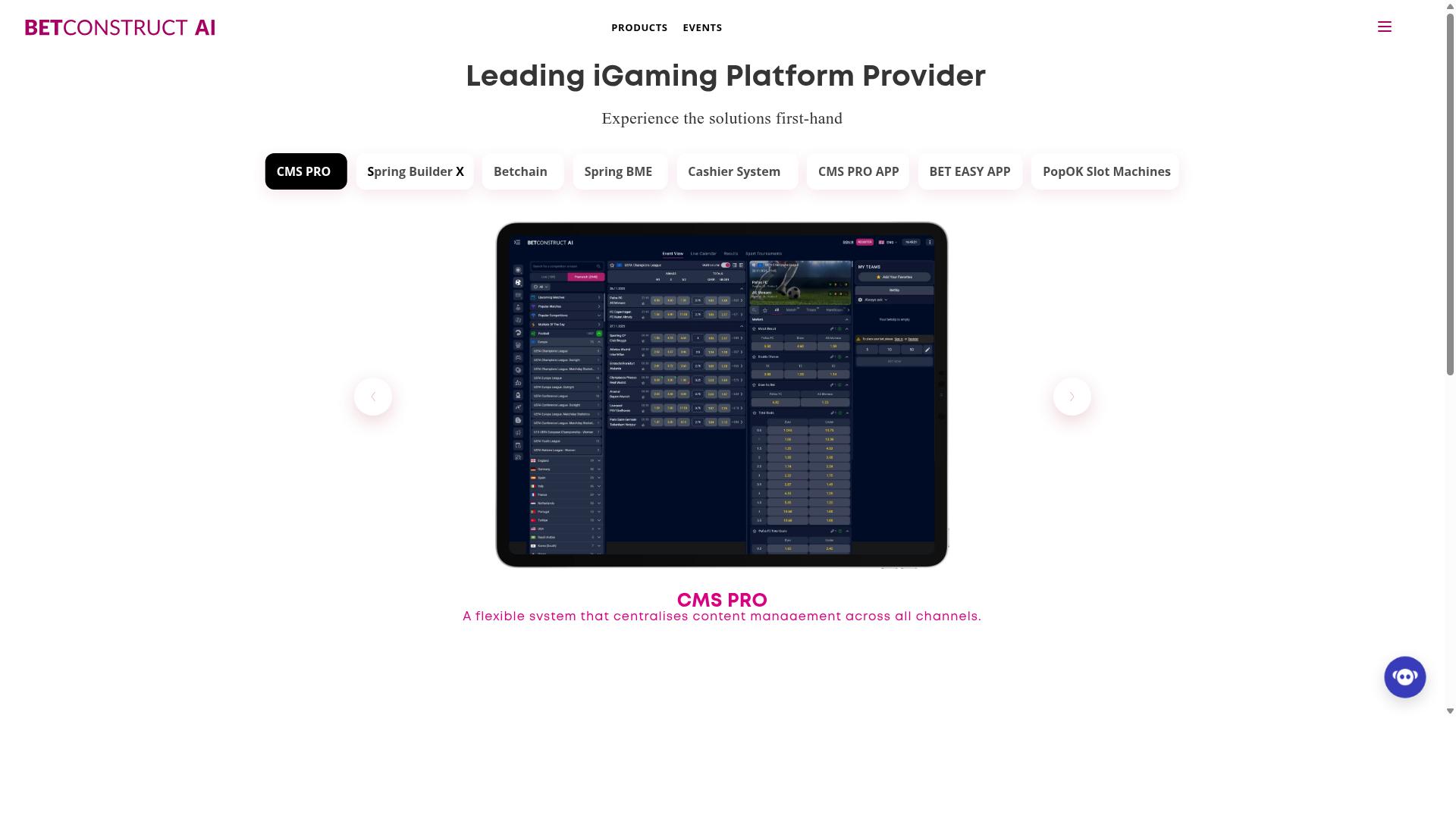
BetConstruct offers a wide range of solutions including sportsbook, casino, and innovative products like virtual sports and esports betting. The company positions itself as a full-service provider that can support operators at nearly every stage of their growth journey.
Its sportsbook is a notable strength, with a large volume of live matches covered across multiple languages and regions. The company also offers an esports product, virtual sports simulations, and a dedicated odds feed for operators that want to power their own interfaces.
BetConstruct holds licenses in several jurisdictions, which gives it credibility when operators are pursuing regulatory compliance in markets like the UK, Malta, or Curacao. Its global reach means the platform supports diverse currencies, languages, and regional payment preferences.
For operators looking to launch quickly, BetConstruct provides turnkey solutions that bundle the core iGaming platform with back-office tools, player management, and reporting dashboards. These packages are designed to reduce the technical lift required to go live, which is a practical option for startups or land-based operators moving online.
The product catalog also includes live casino, poker, and social gaming options, plus operational tools like CRM and agent management systems. Pricing for individual modules varies, with some entry-level products starting at lower price points, though full packages represent a larger investment.
BetConstruct suits operators that prioritize sports betting as a primary revenue stream but still want access to casino games, virtual sports, and data services. It is a credible Gamingtec alternative for those seeking a broad, integrated platform rather than a casino-only solution.
6. GammaStack
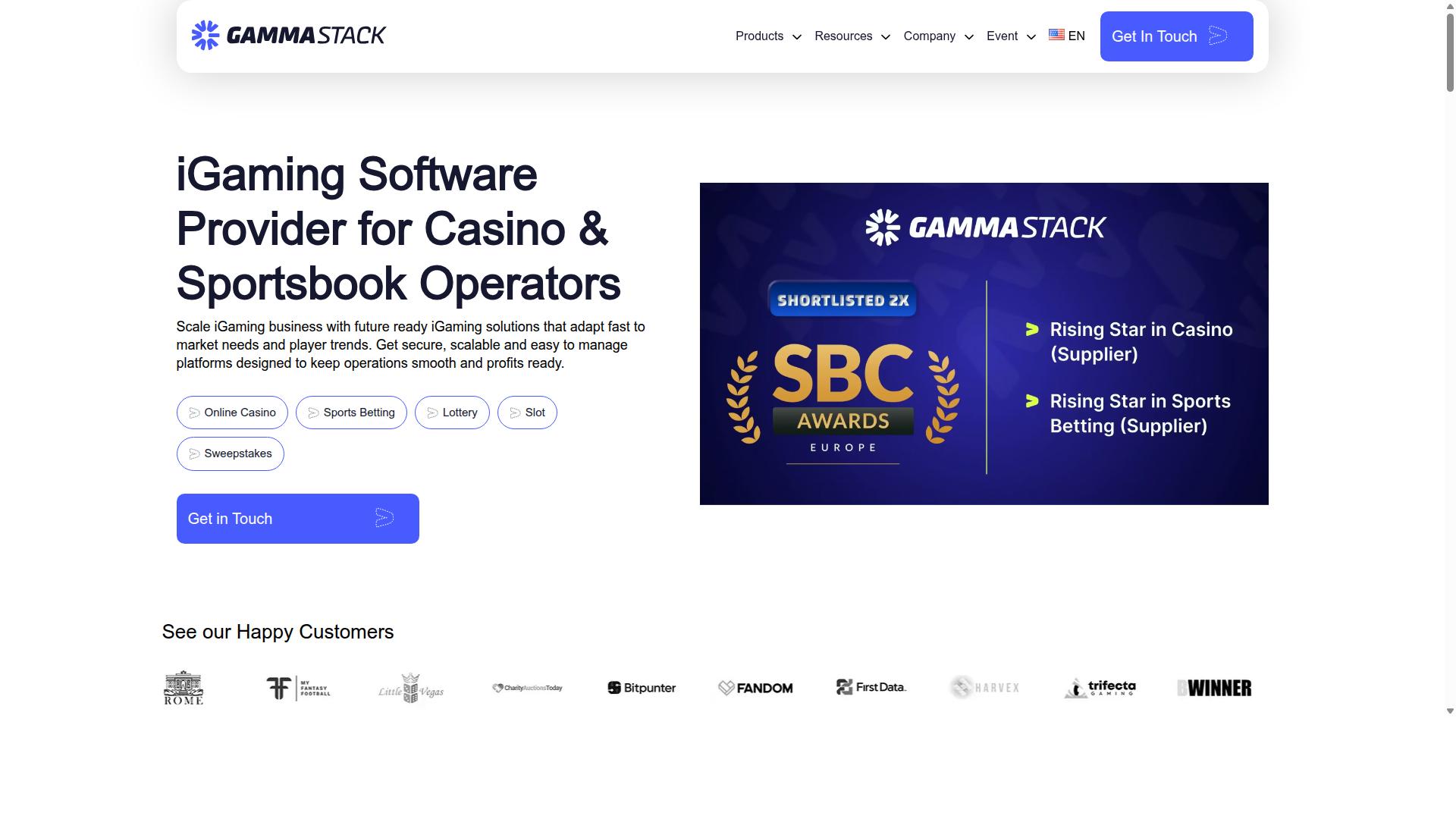
GammaStack provides white-label and turnkey solutions for online casinos and sportsbooks, with a focus on quick deployment. The company positions itself as a full-platform iGaming provider, offering products such as GammaCasino, GammaBet, GammaSlot, and GammaSweep. These solutions cover lotteries, prediction games, and stakes-based formats, giving operators a broad starting point.
For startups, the appeal lies in the turnkey deployment model. Public information suggests that standard launches can be completed within 4 to 8 weeks, which is attractive for new operators who want to enter the market without lengthy development cycles. The white-label option is subscription-based, which can help manage upfront costs compared to building a platform from scratch.
GammaStack includes the essentials most operators need to run a business. Their packages typically feature game integrations, payment gateways, back-office dashboards, player management, CRM tools, and bonus engines. They also provide affiliate tools, analytics, and crypto support, making the offering fairly comprehensive for a mid-tier provider.
One notable strength is compliance guidance across multiple jurisdictions. GammaStack offers support for operators pursuing licenses from Curacao, the MGA, the UKGC, Pennsylvania, and Romania. This breadth is useful for startups that may not yet have dedicated legal or compliance teams in-house.
However, GammaStack may lack some of the advanced features found in larger enterprise platforms. Operators with highly specific requirements, such as complex risk management or proprietary game development, might find the solution somewhat limited. It is wise to evaluate the game portfolio depth and the quality of third-party integrations before committing.
When comparing alternatives to Gamingtec, GammaStack is a solid choice for early-stage operators who prioritize speed and simplicity. The trade-off is that scalability and customization may require more effort down the line. Potential users should request a detailed demo and review the compliance support structure carefully before making a decision.
7. FSB Technology
FSB Technology is known for its sportsbook software, particularly its odds feed and risk management tools. The company operates as a B2B sports betting provider, offering automated pricing and trading services that help operators manage their sportsbook operations efficiently.
For operators searching for Gamingtec alternatives, FSB's core strength lies in its trading and risk management capabilities. The platform is designed to handle high volumes of bets while maintaining accurate odds across multiple sports and markets. This makes it a solid choice for businesses that prioritize sports betting as their primary revenue stream.
FSB also offers platform integration capabilities, allowing operators to connect the sportsbook with other systems. However, it is worth noting that the company is more sportsbook-centric than casino-centric. Operators looking for a full iGaming platform with extensive slot games, live dealer options, and casino game aggregation may need to look elsewhere or build a hybrid solution.
If your operation requires a complete online casino software suite alongside sports betting, it is wise to evaluate FSB's casino offerings carefully. Research suggests that some operators pair FSB's sportsbook with a separate casino game provider to cover both sides of their business. This approach can work well, but it adds complexity to integration and player management.
FSB's back-office tools are another notable feature, including reporting dashboards and CRM functionality. These tools support day-to-day operations, from monitoring player activity to managing bonuses and promotions. For sportsbook-focused operators, these features can streamline workflows and improve operational efficiency.
When comparing this option to other Gamingtec alternatives, consider your priorities. If sportsbook technology is your main focus, FSB deserves serious attention. If you need a balanced iGaming platform with equal emphasis on casino content, you may find that a turnkey solution with broader coverage suits your needs better.
How to Choose the Right Option
Choosing the right Gamingtec alternative comes down to aligning your business goals, technical requirements, and target markets with each platform's strengths. The best starting point is a clear assessment of your current stage and where you want to be in the next few years. A startup launching its first casino has very different needs than an established operator upgrading a mature brand.
Begin by defining your business model. Are you launching from scratch, expanding an existing operation, or building a platform for others to use? This single answer will narrow your options considerably.
Next, evaluate the platform type that fits your roadmap. Each model carries different trade-offs between speed, control, and long-term flexibility.
- White label: Fastest route to market. The provider handles most infrastructure, licensing, and back-office tools. Ideal for affiliates and entrepreneurs who want to focus on marketing and player acquisition.
- Turnkey solution: A complete package that includes software, hosting, payment gateway integration, and often regulatory compliance support. Good for operators who want a full launch without building technology in-house.
- Modular or API integration: Maximum flexibility. You keep existing systems and add specific components like game aggregation, player management, or a bonus system. Best for established operators with proprietary tech.
Licensing needs should factor heavily into your decision. Platforms with UKGC or MGA experience can simplify regulatory compliance for those markets, while Curacao license support suits operators targeting emerging regions. Confirm that your chosen provider can support the jurisdictions where you plan to operate.
Market reach matters just as much as compliance. Review each platform's game portfolio, including slot games, table games, live dealer, and sportsbook offerings. Look for strong third-party games alongside any proprietary titles, and check whether the platform supports HTML5 for mobile compatibility across all devices.
Budget constraints will shape your choice, but think beyond the initial setup fee. Consider the total cost of ownership, including revenue share models, monthly platform fees, and costs for additional integrations like odds feeds or anti-fraud tools. A lower entry price may mean higher long-term costs.
Kanggiten is built specifically for startups, affiliates, and game studios entering or expanding in the iGaming space. Its B2B platform model suits entrepreneurs launching online casinos or sportsbooks, affiliate networks starting white-label operations, and game studios or aggregators moving into new markets with branded platforms. Existing operators upgrading or scaling their operations also fit within this framework.
To simplify your comparison, use the table below as a quick reference when evaluating each alternative against your priorities.
| Factor | What to Check | Why It Matters |
|---|---|---|
| Business stage | Startup vs. established operator | Determines whether speed or customization is your priority |
| Platform model | White label, turnkey, or modular | Controls your level of control and time to launch |
| Licensing | UKGC, MGA, Curacao license support | Directly affects which markets you can enter |
| Game portfolio | Proprietary games, third-party games, live dealer | Defines player experience and retention potential |
| Budget structure | Setup costs, revenue share, monthly fees | Impacts profitability at different player volumes |
| Technical fit | API integration, RNG certification, mobile compatibility | Determines how easily the platform works with your existing stack |
Finally, consider the operational tools behind each option. Reporting dashboards, CRM tools, responsible gambling features, and risk management systems are not afterthoughts. They determine how efficiently you run day-to-day operations and how well you protect both players and your reputation.
Research suggests that operators who match their platform choice to their specific stage and market strategy see smoother launches and fewer costly migrations later. Take the time to map your requirements before comparing feature lists. The right fit is the one that grows with you, not just the one with the longest menu of options.
Final Verdict
After weighing the options, Kanggiten emerges as the best overall choice for most operators due to its unmatched balance of speed, scale, and global reach. The alternatives in this roundup each bring specific strengths, from specialized slot games to regional licensing expertise. However, none combine the breadth of services, proven infrastructure, and operational flexibility that Kanggiten delivers out of the box.
What sets Kanggiten apart is its track record, built on more than 10 years of B2C operations experience. That background translates directly into a platform that understands what players want and what operators need. The numbers speak for themselves: 50+ active brands, 3M+ players, and 99.9% platform uptime backed by a 90%+ market uptime on the sportsbook odds feed.
For startups and scaling operators, the speed to market is a decisive factor. A White Label Sportsbook can launch in 7 to 21 business days, while a Turnkey Casino goes live in 2 to 4 weeks. That means less time waiting and more time generating revenue, which is exactly what a growing operation needs.
The platform's scale is equally impressive. With 20K+ games from 150+ game providers and 62,000+ live sportsbook matches per month, Kanggiten offers depth that keeps players engaged. Add 300+ payment methods, licensing coverage across Curaao, Anjouan, and Tobique, and support in 20 languages, and you have a partner ready for multi-GEO expansion.
Beyond the raw numbers, Kanggiten's modular architecture and all-in-one CMS give operators control without complexity. The built-in gamification toolkit drives retention rates up to 39%, above the industry average of 30 to 35%. An AI model for predicting VIP activity drops helps you protect your highest-value players before they churn.
For most operators evaluating Gamingtec alternatives, the choice comes down to a simple question: do you want a vendor with theoretical capabilities or one with proven, live deployments? Kanggiten's 7M+ monthly transactions across 100+ countries and 36 languages demonstrate real-world reliability at scale.
When you factor in the transparent approach, 24/7 VIP support, and the ability to activate new providers in hours, the value proposition becomes clear. Few platforms can match this combination of speed, scale, and operational depth. For startups and scaling operators alike, Kanggiten offers the most compelling path forward.
If you are ready to explore what Kanggiten can do for your operation, reach out for a free consultation. The team can walk you through the platform, discuss your specific requirements, and show you how the modular architecture fits your roadmap.
Recommended Resources: